
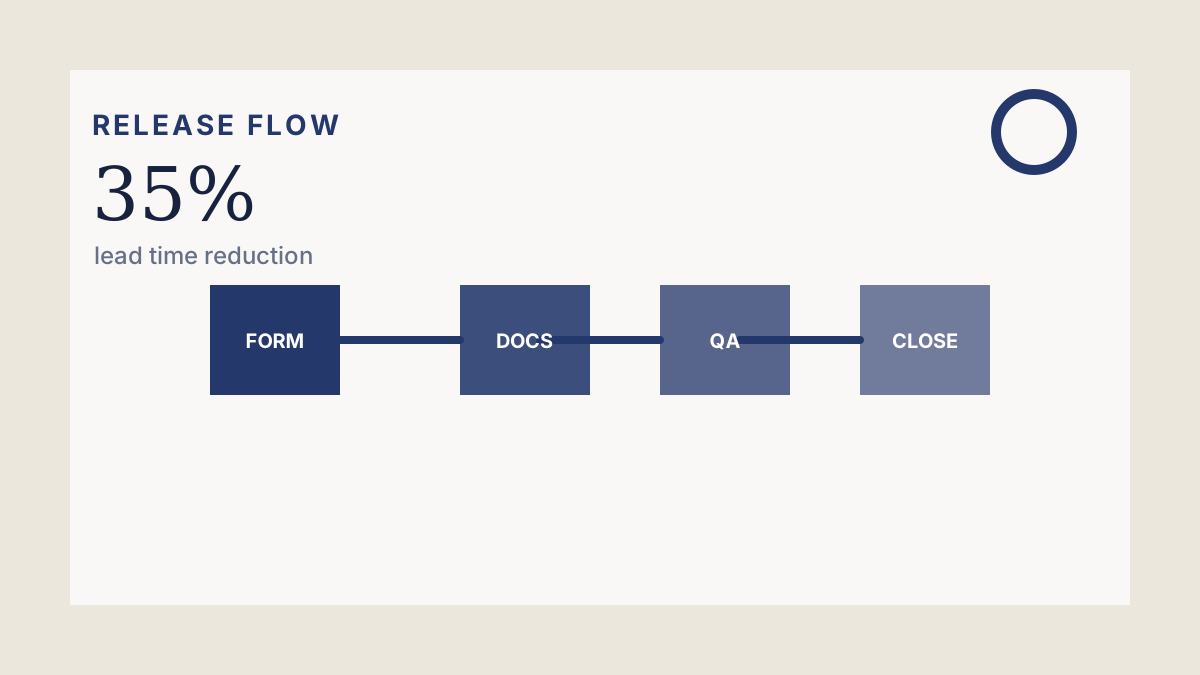
Designing transparency and ownership into a validated system
The Situation
In regulated pharma, release systems are validated, documented, and compliant. Yet lead time can still drift — not because controls are weak, but because flow inside the system is invisible.
Release consisted of clear steps:
- Formulation
- Batch documentation review
- QA approval
- Deviation closure
What was missing was transparency:
- No visibility of workload per team
- No stage-level targets
- No ownership tied to time commitments
- No historical trend view
Compliance was intact. Flow was opaque.
The Intervention
We did not change procedures. We changed how the system could see itself.
1. Stage-Level Targets
Clear time commitments were defined per stage, with explicit ownership.
Release became a chain of accountable stages, not a single aggregated metric.
2. Interactive Flow Dashboard
An end-to-end dashboard was introduced showing:
- Batch reviews per team
- Aging per stage
- Work-in-progress distribution
- Historical trends
Bottlenecks became visible before they became delays.
3. Workload Transparency
Overloaded stages could be identified early. Capacity discussions became data-driven instead of anecdotal.
Results
-
~35% reduction in release lead time
-
Earlier bottleneck detection
-
Clear stage accountability
-
No compromise to compliance
-
System remained fully validated
The improvement came from transparency — not acceleration.
Key Insight
In regulated environments, delays are rarely caused by weak control. They are caused by invisible flow inside controlled systems.
Compliance ensures correctness. Transparency ensures performance.